

A Glimpse into the Timeless Craft
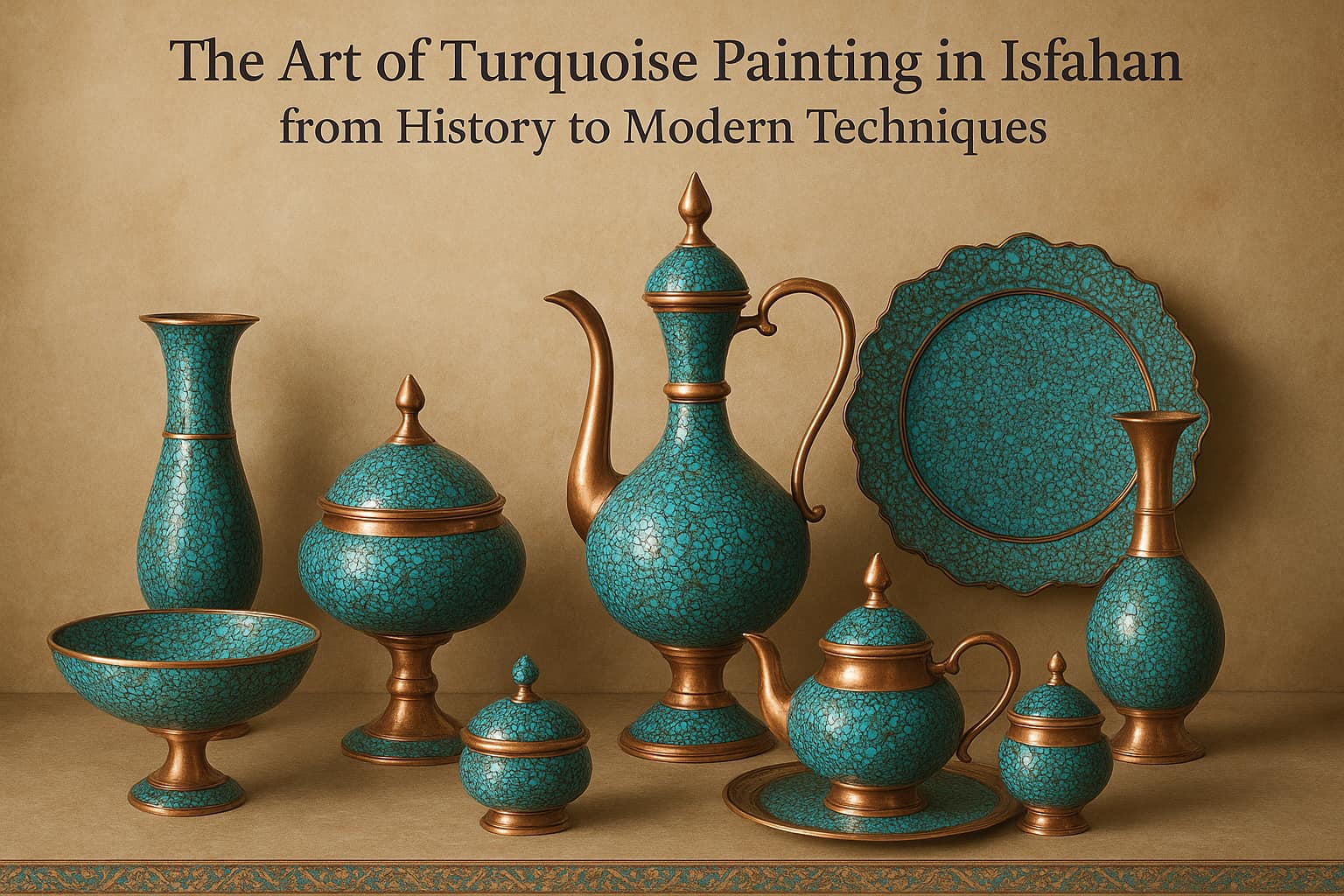
Turquoise inlay (Firoozeh Koobi) is one of Iran’s most exquisite handicrafts, with Isfahan being its beating heart. This art form transforms ordinary metals—such as copper, brass, and silver—into dazzling works of art adorned with turquoise, a stone revered for its celestial blue hue. Rooted in ancient Persian traditions, Firoozeh Koobi seamlessly blends history with contemporary innovation.
Historical Roots: From Persia to the World
Turquoise inlay dates back over a thousand years, flourishing during the Safavid era when Isfahan was a hub of art and culture. Persian artisans mastered the technique of embedding turquoise pieces into metal surfaces, creating intricate patterns on jewelry, boxes, vases, and religious items. The stone itself, symbolizing purity and protection in Persian culture, was often used in royal ornaments and architectural decorations.
The Artisan’s Process: Tradition Meets Precision
Creating a turquoise inlay masterpiece involves meticulous steps:
-
Metalwork – A base object (e.g., a vase or plate) is shaped from copper or brass.
-
Engraving – The surface is etched with delicate designs, often inspired by Persian motifs.
-
Inlaying – Small turquoise pieces are carefully placed into the grooves.
-
Polishing – The surface is smoothed to a mirror-like finish, enhancing the stone’s brilliance.
Modern Innovations: Keeping the Art Alive
Today, Isfahan’s artisans experiment with new designs, combining turquoise with materials like enamel or gold. While traditional methods remain sacred, modern tools allow for greater precision, expanding the craft’s appeal to global audiences.
Why Turquoise Inlay?
-
A symbol of Persian heritage
-
Unique, handcrafted elegance
-
Perfect for decorative and functional art
Explore our collection to own a piece of Isfahan’s legacy—where every turquoise inlay tells a story.

No comments