

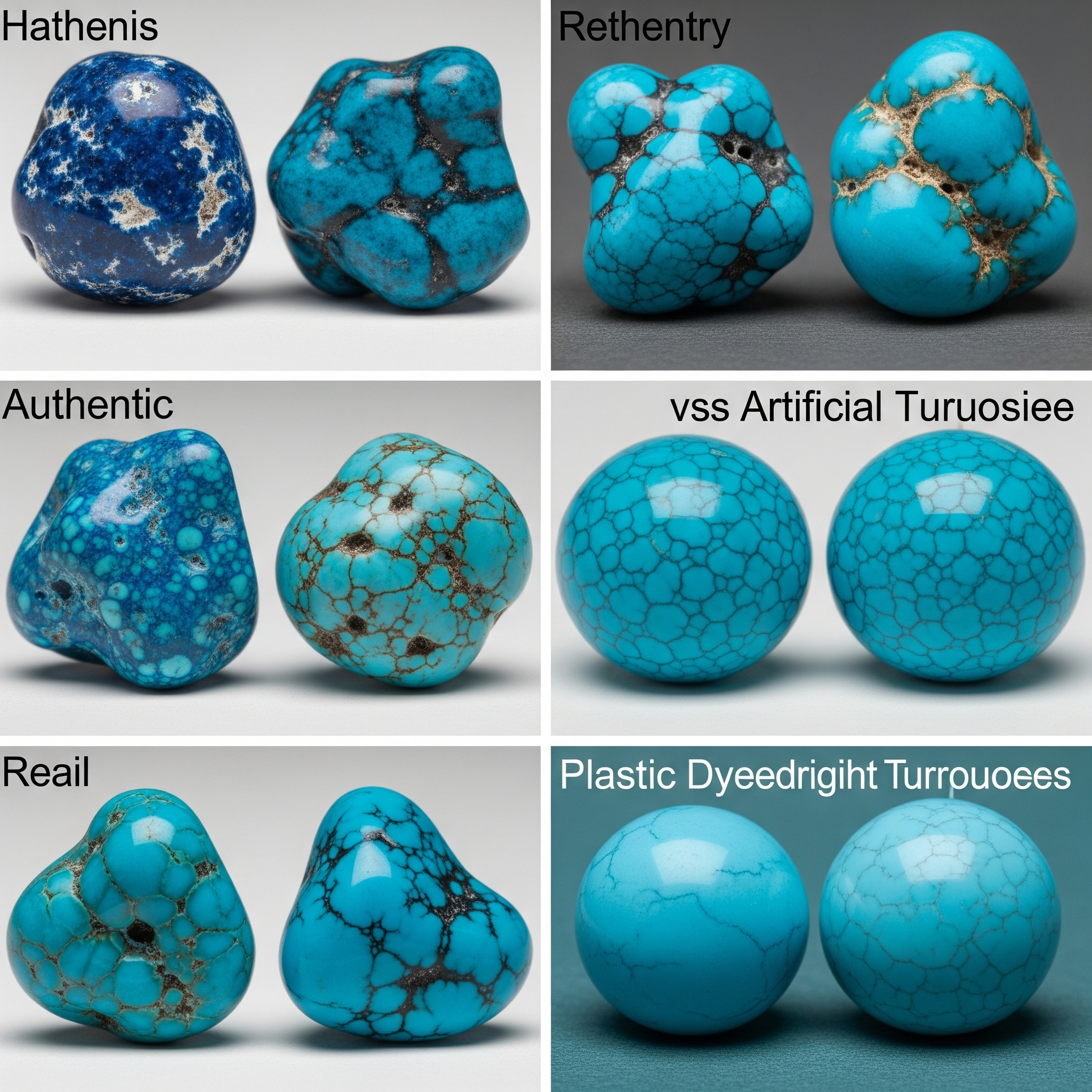
Turquoise is a prized gemstone in handmade jewelry and crafts, but fake turquoise is common. Follow this guide to spot genuine turquoise and avoid imitations.
1. Check the Color & Pattern
-
Real turquoise has natural variations (veins, blotches) and a matte or waxy finish.
-
Fake turquoise often looks too uniform, overly bright, or plastic-like.
2. Examine the Surface & Texture
-
Real turquoise is slightly porous and feels cool to the touch.
-
Fake turquoise (plastic/resin) feels warm, smooth, or has a glossy coating.
3. Look for Matrix Patterns
-
Genuine turquoise may have dark or brown matrix lines (natural host rock).
-
Fake versions often have painted or artificial webbing that looks too perfect.
4. Perform a Heat Test (Carefully!)
-
Heat a needle and lightly touch an inconspicuous spot:
-
Real turquoise won’t melt or smell.
-
Fake turquoise (plastic/resin) may melt or emit a chemical odor.
-
5. Check the Price & Seller Reputation
-
Too cheap? Likely fake. Real turquoise is valuable.
-
Buy from trusted artisans or certified sellers.
Final Tip: When in doubt, ask for a gemstone certification or consult an expert.
By learning these tips, you can confidently choose authentic turquoise handicrafts!


No comments